HCAHPS 2.0: What We Can Do To Help Patients Rest in the Hospital


 RSS Feed
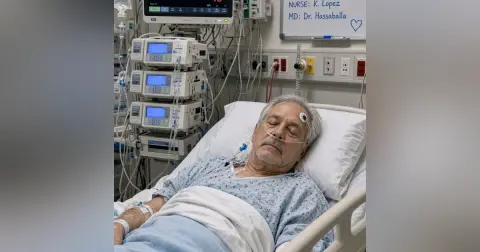
CMS just released the results of the first year of data in the new HCAHPS survey, and patients said they are not getting the rest they need. Rest and sleep are so important for illness recovery, and on this week's episode of the podcast, Dr. Hassaballa discusses practical steps to help patients get more rest during their hospital stays.
And, Dr. Hassaballa also sends Thanksigiving wishes.
Becker's Article: https://www.beckershospitalreview.com/patient-experience/hcahps-2-0-results-are-out-6-takeaways/
Survey results: https://data.cms.gov/provider-data/dataset/99ue-w85f
Hesham A. Hassaballa: This is Healthcare Musings. I'm your host, Dr. Hashem Hasabala. Welcome to Healthcare Musings, everybody. Happy to have you with me. So the CMS, the Center for Medicare and Medicaid Services, they have something called the HCAP survey. It is a patient survey that is sent out to all patients after their hospital stay. And they implemented a number of changes starting January 2025 and made a whole bunch of changes to Way data is collected. Now you can have online surveys. Before it was all print surveys, and that would limit the results. Now you can do it online. They extended data collection periods. They added new measures, so on and so forth. And you can kind of read all about it in the show notes. I'll I'll post it in the show notes. The Beckers had a article about the main takeaways from the first full-year results that they published on November 12th, 2026. And there was one thing I wanted to highlight. and again, I'll I'll link the article as well, so you can look at kind of all of the all of the takeaways from the survey. the the first takeaway is that rest is the new weak spot. So Only forty-four percent of patients said that they always got the rest that they needed. And 20% said that they either sometimes or never got the rest they needed. And that put rest below medication side effects, which was at 49%, which was the previously lowest scoring question. And 59% said the area around the room was always quiet at night. So that's I guess that's more than more than half. but still. And here's the key, and that's what I wanted to focus on. Rest, especially sleep, is super important for illness recovery. when we get sick at home, we sleep and we try to sleep as much as possible. And sleep deprivation is definitely a physiologic stress. It's it's actually a torture technique, and it's been associated with so many adverse health outcomes. And when someone is sick, when someone is in the hospital recovering from illness. The thing that they need the most is sleep. And the thing that is very frequently sacrificed is sleep. And that's the problem. When I'm in the ICU and I'm working, you know, it's somebody's not, you know, vented and sedated or something, and they're sleeping and they're say they have DKA or something like that, I'm there for twelve hours. Usually when I get there, I'm rounding on my patients very, very early in the shift just to see them and make sure everything's okay. If they're sleeping and there's no compelling reason for me to wake them up, I leave them sleeping. I let them rest. I'm there the whole day. I could always come back, especially during multidisciplinary rounds or any other time, and introduce myself. And if this is the first time I'm seeing them, or see them, or check in on them, there's no reason for me to go and wake them up at 7:15 or 720 or 7:30. If I don't have to, no, a lot of times other people do, and that's unfortunate. But I might for my part, I try to let them sleep. And you know what? Patience. All the time are thanking me. They're like, thank you so much. I said, I, I walk in. Hey, I came in earlier, but I I didn't want to wake you up. thank you so much. Because they because they know, you know, they're especially in the ICU. A lot of times ICUs are noisy. There's things going on, there's people talking, they're getting vital every hour, the cuff is squeezing every single hour, the monitor is beeping, the IV pump is beeping. All that disturbs sleep. And and then, and this is I never understood, then people are, you know. The labs, AM labs are ordered at 4 a.m. Why? Sometimes 3 AM. That is so early. Why? There's no reason why. And in my in in my mind, there's no reason why you need to do labs at 4 a.m. Now again, if someone's vented and sedated, it's one thing. And if they're not vented and sedated, like a DKA patient or a STEMI patient had a STEMI, and I was in the ICU after the cath lab or what else the people come in and the i see you after a stroke for example now that we're waking them up every hour to do neurochecks after t and k poor people i mean there's we have to and it it's it's super stressful on on the body but there's no reason why i need to get labs at four in the morning there's no reason me personally when i can i order labs at six a.m same thing with a x-rays they don't have to be at four in the morning why are we waking patients up at four in the morning to do labs It's a lot of times it's for my convenience as a clinician. Who cares about my convenience? Honest to God, who cares about my convenience? If the labs are done at six AM and they're not ready and they've been ordered and not ready when I come in at seven, fine. I'll wait. I'll wait till seven fifteen, seven thirty, seven forty, eight, nine. Doesn't matter. honestly, I wouldn't necessarily mind if the labs were drawn at seven AM when I first get there or an X-ray's done at seven AM. it's just doesn't make any sense. You know, it should not be for the clinician convenience, okay? Yeah, sometimes surgeons come in at six in the morning before their before their surgeries and they want to see the labs. I get that. And at the same time, I think we really have to go back and prioritize patient rest and patient recovery. And this survey, it should be a clarion call for hospitals and health systems to really try to do what they can to prioritize rest and sleep because you have to. It's so important to to recovery. And a lot of times the hospital is the worst place for a sick person. Sleep deprivation, I've seen it. I have seen it. It causes delirium. I have seen rare normally healthy people after heart surgery, you know, they sit in the ICU, they're so sleep deprived, they have hallucinations. I mean, I had hallucinations in med school because I was sleep deprived, right? So things such as quiet time, trying to minimize noise. I know the some of the hospitals I've worked, they've had quiet time during the day and then quiet time at night, extending labs to later in the in the morning so that patients can sleep. Maybe if somebody's hemodynically stable and they don't need hourly vitals, that may maybe we can vital them every two or every three or every four hours. They're still in the ICU, but they don't have to get vitals every single hour and that thing is squeezing them every single hour. Maybe, maybe we turn the monitor off in the room, the alarms, and have the alarms outside. There is always a telemetry thing on the outside and that will alarm, but maybe turn the monitor off inside. To allow the patient to rest. Again, this is somebody who's not vented and sedated. try to minimize the IV pumps. Sometimes people turn on their side and they they bend their arms and so the IV pumps and it's it has to be loud to the alert the staff. I get that. At the same time, try to do what we can to give our patients the rest. This survey is telling us that we need to do better at making sure our patients rest and get the rest that they need in the hospital. No one wants to be hospitalized, no one wants to be sick, and we can. And if patients don't get rest and sleep, it can make recovery that much more difficult and add physiologic stress. Some things are unavoidable. We should do whatever we can to make sure that the patients get the rest that they need as they recover from illness in the hospital. And it's the sooner they get out, the better. That's why we're always focusing and trying to get length to stay down, because it's always better for someone to rest and recover at home in their own bed, in their own environment, than in the hospital, which is a foreign bed, foreign environment. And so, you know. Again, take a look at the takeaways. Becker's had a great takeaway in this article. Take a look at the the survey results. I'll I'll link it in in the show notes. And let's do what we can to make sure that our patients get the rest and recovery they need. And since this is the week of Thanksgiving, I I I am I would be remiss if I didn't stop and reflect over with everything that this field has, all the difficulties, all the challenges, all the things that make it di challenging for for for docs and nurses and aps and everybody in the healthcare field and there's a lot of things that need to be done and I'm gonna be continuing to explore kind of what we go from where what we do and where we go from here with with the healthcare field, I still cannot thank the Lord enough for giving me the honor and the privilege to be an agent of healing. It's been a life dream. It's the only thing I've ever wanted to do. And this year and every year, I am super grateful that I am a f a physician and an agent of healing. And I wouldn't want to be anywhere else, and I wouldn't want to do anything else in the world. And I'm so very grateful. And I'm grateful for you guys, for the audience, for the support, for for for my my my colleagues and my friends and my family. And especially I'm just I couldn't be more grateful that I am a doctor. I'm really living my dream. And so happy Thanksgiving for everyone listening and to and to one and all. And hope next year brings us things that are better. Thanks guys for your time and attention, and I'll see you next time on Healthcare Musings. Happy Thanksgiving. Thanks for listening. Healthcare Musings is a production of FaithfulWord Media. Sign up at drhasabala.com to get every episode delivered directly to your inbox. And please don't forget to give the show a five-star review. Thanks so much.