Dr. H's Verbal Hassaboluses: Another Reason I Don't Like The System-Based Note


 RSS Feed
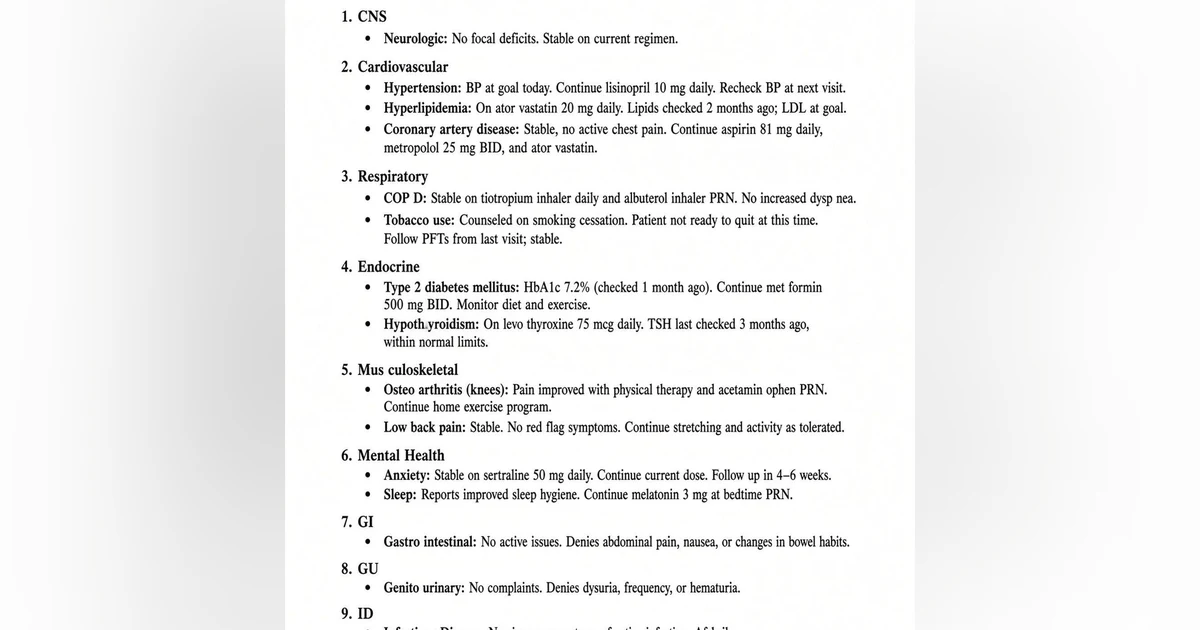
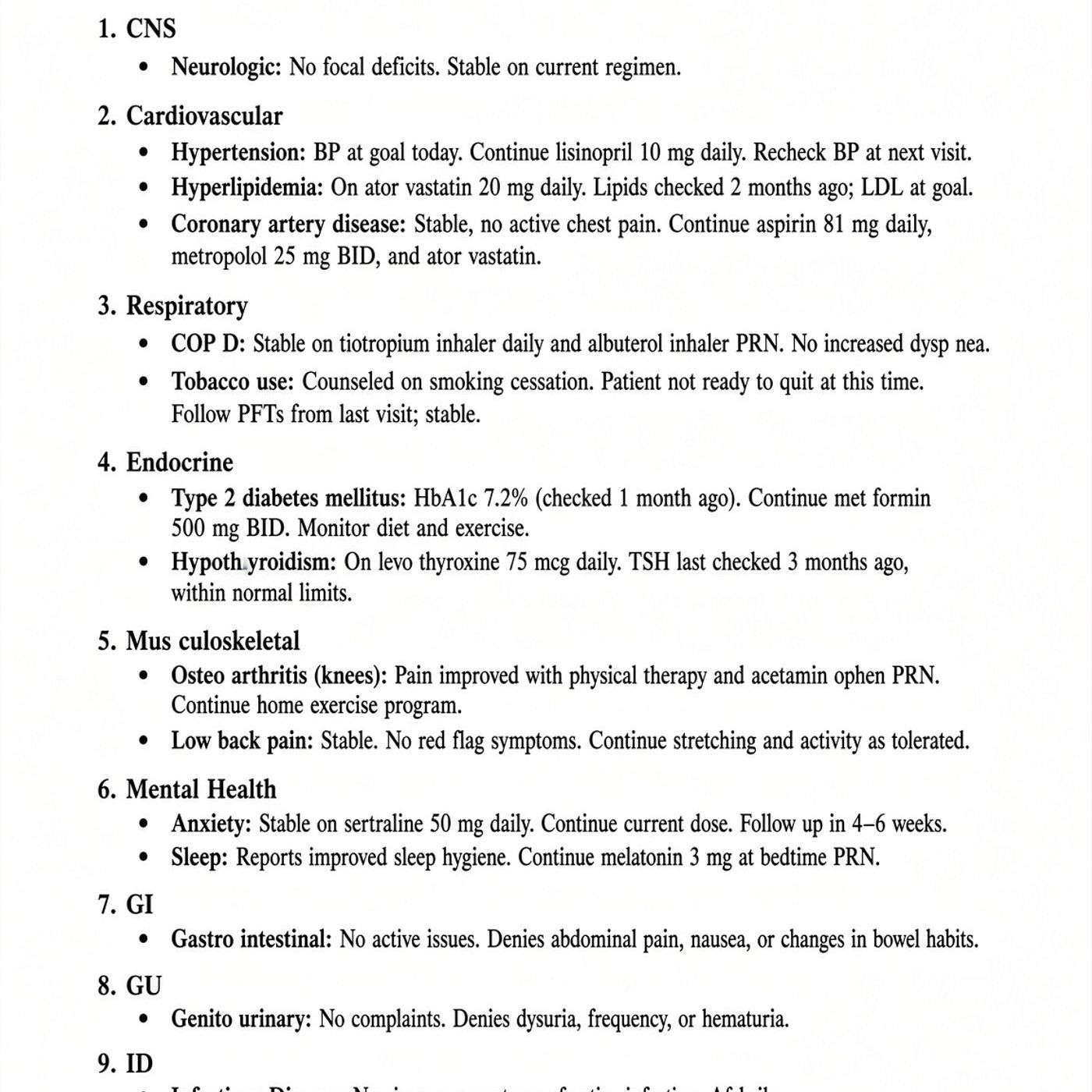
 I really, really do not like the system-based note and presentation. After a recent stretch of night shifts, I further explain why this way to document is so undesirable.
Hesham A. Hassaballa: This is Healthcare Musings. I'm your host, Dr. Hashem Hasabala. Welcome to Healthcare Musings everybody. Happy to have you with me. Okay, so this is the next installment of Dr. Hasebala's verbal hosebolises. or Dr. H's verbal hosebolises, rather. th and it's again, I'm sorry. It's about the system-based note. And this was based on a recent stretch of telemedicine night shifts that I had. And I get it. Okay, and I talked to one of the attendings afterwards about it. I get the sp point of the system based approach. You don't want to miss anything, right? You want to go through every single system and capture every single diagnosis. You know, whether they have diabetes and and or they have heart disease or they have I mean it's it's just a it's another way to do the problem based note. I mean I I I've grew I grew up with the problem based note. There's a lot of people now who are attendings that were training that trained way after me that grew up with a system based note and so that they're used to that. I get it I get that you don't want to miss something and because there are times where, you know, I'm taking care of a patient and I see you and yeah, okay, they're they have diabetes, they have stress hyperglycemia, but it's not my main focus. My main focus is to take care of their life threatening septic shock. Okay, yeah, if they're hyperglycemic and it's it's above a certain target, we should treat it. There's no question about it. Or, you know, if they have underlying hypertension, you know, we should keep an eye on it. I mean and And but if someone's in septic shock, I'm not gonna start their antihypertensive medications, right? So so I I get it. You you you don't want to miss anything. I understand. And and here's the issue, okay? When the trainee is is thinking in the substance in the system-based note way, when they're presenting to me, okay, they're they're going through the system. So and here's the problem. Say your principal Diagnosis is septic shock from urinary tract infection. Okay. So the septic shock is the CV, right? Because it's shock. And so now you have to tell me, okay, they have septic shock and we're and they're and we've given fluids and it's not enough. So we started norepinephrine. We're gonna add vasopressin. We're gonna and then okay. My next question in my mind is okay, why are they septic? What's the source of infection? I have to wait. Until the ID section at the bottom. Okay. Later. Okay, 'cause it was head to toe. So later I have to wait until they say ID they have a urinary tract infection. they have a urinary tract they have pneumonia. my lord. if it's don't say pneumonia, because pneumonia's in the pulm section, okay. So I can I'll get it right after the C V. But if it's something else, like say it's SBP, right? Spontaneous bacterial peritonitis, that's in the GI section. So I gotta wait all the way to the bottom. Of when they go to G I or G U or yeah, I say say it's not say it's prosthetitis. Okay. I gotta wait till G U. So I'm thinking, okay, they're septic. okay, why are they septic? I don't understand. What's the source? And then they come say, G U prosthetitis. they have prosthetitis. that's the source. Do you see that that's the pr do you see how it's disjointed? Do you see that's the problem that I have with it, right? So there was one time, and I'm not begrudging the residents at all. I I don't want anyone to misunderstand me. And at the same time I'm trying teach them how to be diagnosticians. This is the time to be a diagnostician. and we'll go later. Like what you would not go through a system based approach with my doctor doesn't do that with me when I go to see him in the office. Right. I when I sa I I s recently saw a neurologist. I'm not gonna he didn't do that to me. He didn't go through it. Even my primary care physician didn't do that, right? He didn't go through system based wa he to We talked about the problems that I'm having and what we're gonna do about it, right? And that's what I want to teach the trainees to be doctors, to be diagnosticians, and then to treat the diagnosis that they've made. so there was one there's a patient with liver disease, right? And I'm thinking to myself as he's as the residents is presenting, and I'm like, okay, does the patient have ascites? and so I ask, did the patient have ascites? I go, Well, I was gonna get that to it in the in the GI section. I'm like, I said, bro, whoa. You see, that's the and you see that's the point of that's the point I have, that's the problem I have with the CEFS and I have to wait until the GI section or the G U section to get the pertinent inform pertinent information. It just makes the the presentation so disjointed. when you're presenting like a like like a system based. And then I look at the documentation again. I look at documentation. If you have something as simple as DKA, right? You have somebody as simple as d they have a simple DKA, they have no encephalopathy, they no hypoxia. They have no hemodynamic instability. They have no diarrhea. They have no no no. So now you look at they just have DKA. Okay. They just have mild same moderate DKA, right? And they're in the ICU, they're on an insulin trip. So they go, Neuro neural, nothing. CV, no issues. Pone, no issues. you know, and then they go, Endo DKA, and this is what we're doing. my god. Why? Why are you making me go down all the way and have to scroll down and then again, again? People don't put, you know, I try, not that my way is the best, not that I'm perfect. please don't misunderstand me. And at the same time, like when I I learned early on in my training, and I'm so grateful that I had teachers like this, the the my my my teacher, my attending, put the assessment plan at the top at the top. That's what people, that's what people are paying the consultants to do. They want to see what his consultation or her consultation is. So rather than make them go through the no, and back then they were all written, there were no electronics They put he puts the assessment plan on the top. And I always when I saw them, I go, That's amazing. That's so awesome. And back then it was a I said this before, this was a it was a triplicate. I don't even know many of my audience knows what knows what that is. It was a triplicate form, right? So the top you put in the chart and the bottom two you you take with you, one for billing and one for your copy. And so he would put the assessment plan and the top form. Here's my assessment, here's my plan, and then all the rest of the billing, the HPI and the fast medical history. Back then we had to do a lot more than we have to do now. That's for billing. Who k no one cares? No one I don't care. No one cares. if I really, really, really want to know what he hurt on the lungs, I'll look. Right? But no, everyone's still stuck to the soap, the subjective, the objective, the assessment and the plan. And now with EMRs, man, they just dump it doesn't even count. It doesn't even count. Maybe I'll go through a maybe I'll have a whole another episode about the new billing rules to to let people know because it's it doesn't count. But what the they're they're just a it's just a data dump. They just dump all the imaging studies that the patients ever had they dump all the labs and they and then they they make the note rather than maybe ten lines into ten pages. Okay. And then I have to go scroll through all that on the bottom to get their their three line assessment and plan. Okay. But with the with the system based note now it's their their fifteen line assess assessment and plan all the way at the bottom. And I have to go through and scroll through. It's so annoying. It's so annoying. So not only do you do this disjointed septus, you know, the the system-based note, I know you won't you wanna you don't want to miss anything, but I have to scroll all the way to the bottom. I've talked about this before. Right. And so it just creates it just creates a disjointed presentation, right? I have to wait until the pertinent okay. We're diag we're diagnosticians. I wanna know in one sentence what's happening, especially when you're presenting to a specialist. You have you're you're in the ICU, right? You're you're a resident. Or you're a hospitalist, okay, and you're consulting you're consulting me as a critical care specialist to help with your critically ill patient. And you you you go you're gonna go through the system based to me? No. You're gonna tell me, Hi, I have this patient. He both came into the hospital with a urinary tract infection, and now I think he's becoming septic, he's more encephalopathic, he's a little hypotensive, I've given him fluids, I think he needs to go on vasopressors, his lactic is going up, his his his his kidneys are getting worse. Can you take him in the ICU or he needs to come to the ICU? Boom. Done. You've gone through all the systems and you've told me a very coherent, quick blurb of why the patient is critically ill and why they need to come to me to help to help them. That's it. Look, not even two seconds. Not neural, they're fine. CV, they think they're a little bit hypotensive. I give them fluids. poem, they're not hypoxic. my god. my god. my god. It makes it so disjointed. And then and then if I ask, if I I think they're septic and I'm gonna ask them. Okay, from what? Right? but that's in the they're not gonna say that, but in their mind, that's in the G U section. I have to go all the way down. they have a UTI. my Lord, don't do that. Why? Why are you doing that? Just tell me. Just tell me. They're septic from a UTI or they have prostatitis or whatever, like pylonephritis, they have kidney stones with hydronephrosis. Just tell me, boom, and again and again and again when you're seeing patients after training, you're not gonna go through, well, doc, how how how how am I doing? Well, your neuro is great and your pulmonary is amazing and your C V is well, you may have some hypertension. Bro, no one does that. No one does that. Okay. So that's my that's further why I'm taking this second verbal hussible verbal husibolus about the system based note because it creates this disjointed presentation, right? And that you I am trying to teach my trainees that you you just gotta you gotta make make a diagnosis, man. You you look at all the things, you look at all the inputs and you say, Here's the diagnosis and here's what I'm gonna do about it. And and especially if you're gonna be you begin to become a specialist and you're gonna receive the the report from your colleagues or you're gonna give the report to another colleague. Bro, it's so annoying having to go through all the systems. especially if the you that you have a very, very busy specialist and you wanna quickly give them the lowdown of what's happening in the patient. That's that's my piece. That's I've I've said my truth about the system based note. and I clearly, as everyone can tell, I don't like it. Anyway, thanks guys for your time and attention and I'll see you next time at Healthcare Meetings. Thanks for listening. Healthcare Musings is a production of FaithfulWord Media. Sign up at drhasabala.com to get every episode delivered directly to your inbox. And please don't forget to give the show a five-star review. Thanks so much.